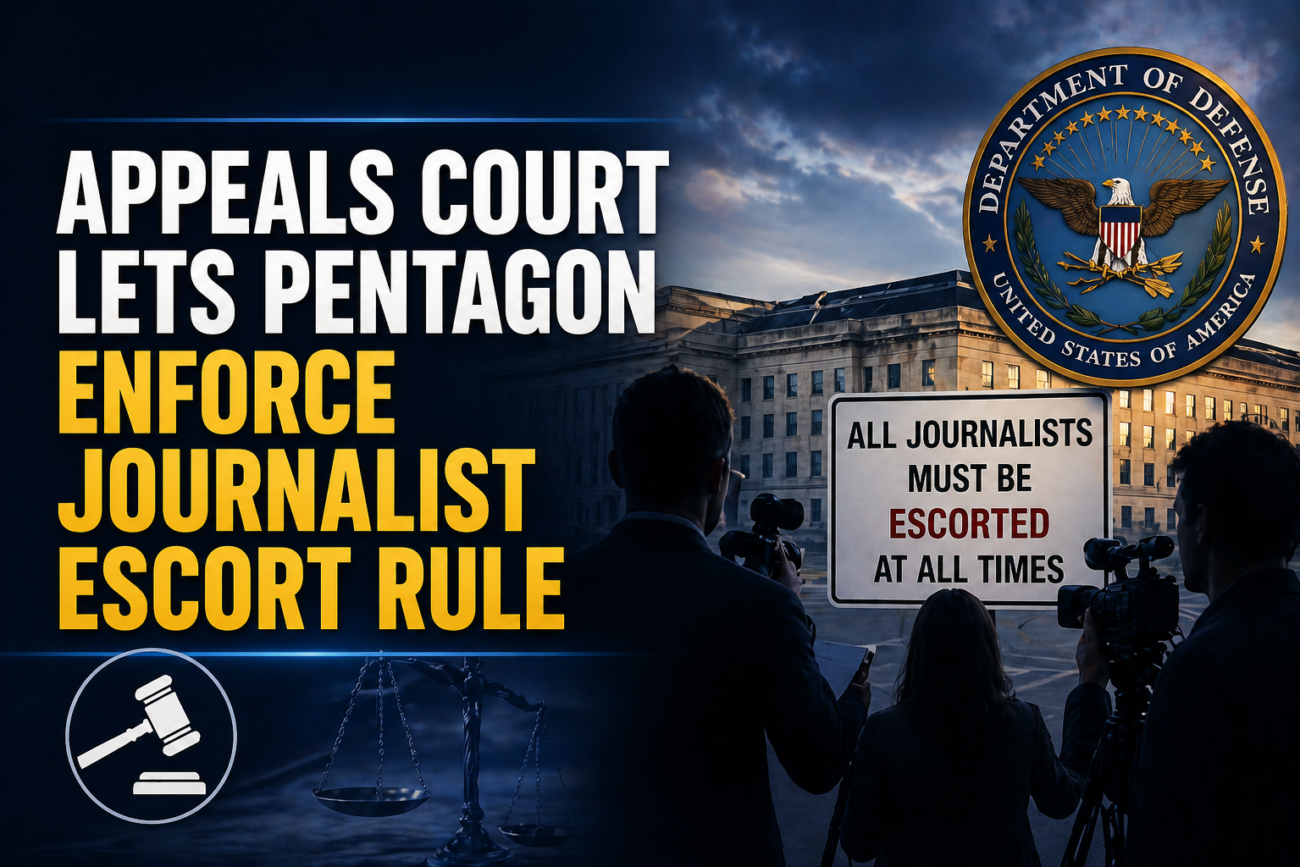
A U.S. appeals court has temporarily allowed the Pentagon to enforce a controversial rule requiring journalists to be accompanied by official escorts while inside the building, marking a short-term victory for the Defense Department in an ongoing legal fight over press access.
The decision pauses an earlier ruling from a lower court that had found parts of the Pentagon’s media policy unconstitutional. While the case continues, reporters entering the Pentagon will still need supervision, a requirement officials say is necessary to protect sensitive information.
What the Court Decided
A three-judge panel ruled that the government had made a sufficient case that the escort policy serves national security interests. As a result, the court granted a temporary stay, allowing the rule to remain in effect while the Pentagon challenges the earlier decision.
However, the ruling is not final. The broader legal dispute—centered on press freedom and constitutional rights—will continue in court.
The Legal Battle
The case began when The New York Times sued the Defense Department, arguing that the new restrictions violate First Amendment protections and limit journalists’ ability to gather information.
A federal judge previously sided with the newspaper, ruling that the Pentagon’s policy infringed on free speech and due process rights. But the Pentagon appealed that decision, leading to the latest ruling from the appeals court.
Why the Policy Is Controversial
The Pentagon says the escort requirement is about safeguarding classified information and reducing unauthorized leaks that could endanger national security. Officials argue that access to the building is a privilege, not a guaranteed right.
Critics—including journalists and press freedom groups—see it differently. They argue that forcing reporters to be accompanied at all times makes it harder to speak freely with sources, verify information, and report independently. One dissenting judge warned that constant supervision could undermine basic journalistic work.
Bigger Picture
The dispute is part of a wider clash between the Pentagon and major news organizations over new media rules introduced in recent years. Many outlets have already pushed back against tighter restrictions, saying they limit transparency and accountability.
For now, the escort requirement remains in place—but the final outcome will depend on how the courts rule in the ongoing appeal.
Share this content:
