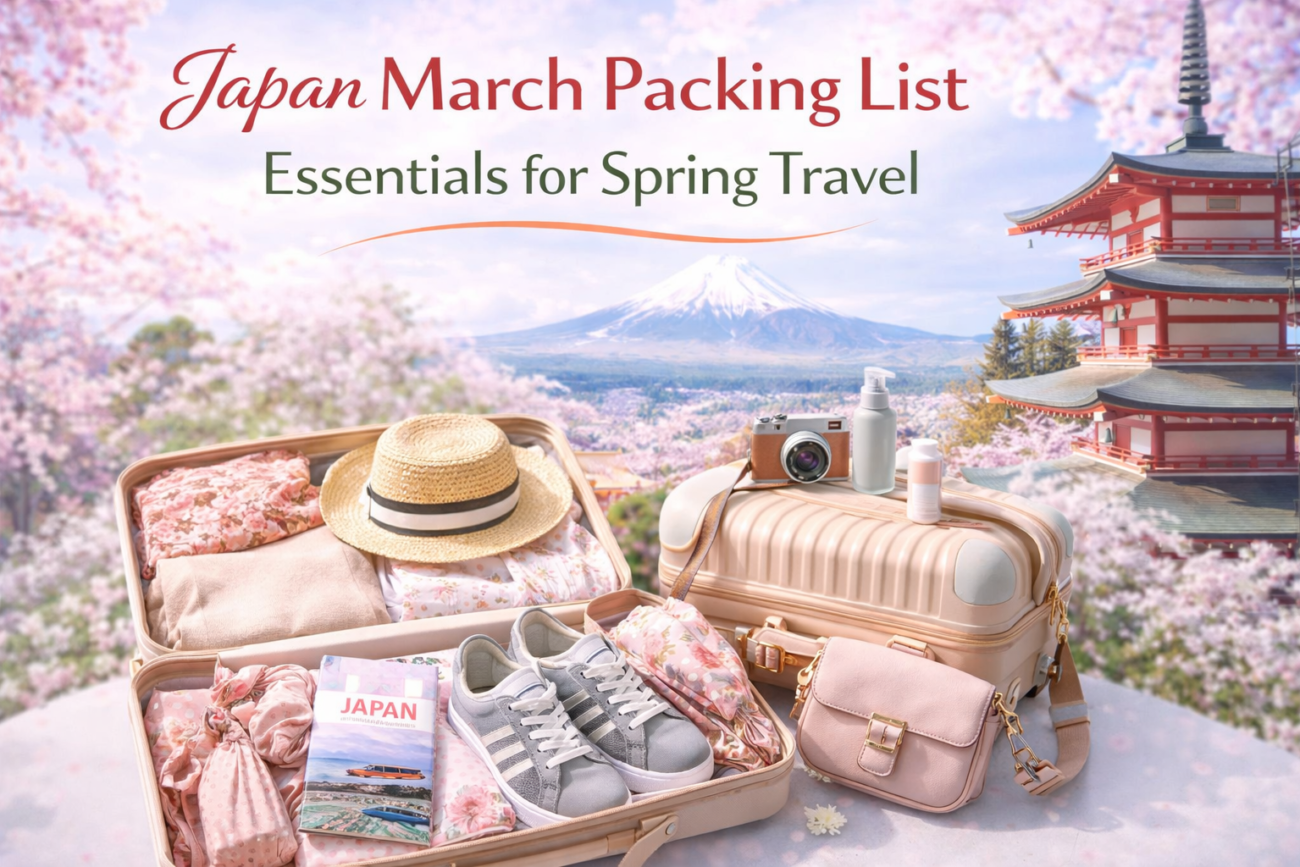
March in Japan is nothing short of magical. The air is crisp, the plum blossoms give way to the very first sakura buds, and everything feels like it’s on the edge of blooming into something beautiful. But here’s the thing — March weather in Japan is sneaky. It can feel like a mild spring day one moment and a chilly, breezy afternoon the next. If you’re planning a trip to Japan this March, packing smart is honestly half the adventure.
This packing list was made specifically for the Japan spring traveler — someone who wants to look cute at cherry blossom parks, stay comfortable on long walking days through Kyoto or Tokyo, and still have room in their suitcase for all the souvenirs they’re definitely going to buy. Let’s get into it.
1: 🧥A Lightweight Trench Coat or Wool Blend Coat
March temperatures in Japan hover between 5°C and 15°C (41–59°F), so a coat is non-negotiable. A classic trench or a fitted wool-blend coat pulls double duty — it’s warm enough for morning temple visits and stylish enough for evening dinner photos. Plus, it photographs beautifully against the sakura backdrop, which every Pinterest traveler knows is half the reason we dress the way we do.
Opt for neutral tones like camel, cream, or dusty blush to complement the soft pink and white of cherry blossoms. A belted style gives you the option to cinch it in when the wind picks up, and it folds down easily into your carry-on without adding too much bulk. This is the single piece that will carry your entire aesthetic through the trip.
✦ Pro Tip: Pack it in your carry-on so you have it the moment you land — airports and morning arrivals can be chilly.
16 Paris March Packing List Secrets for Stylish Travel
2: 👕Lightweight Sweaters & Knitwear (3–4 pieces)
Layering is the secret to surviving Japan’s March weather without overpacking. Bring a few lightweight sweaters in a mix of fitted and slightly oversized silhouettes — think ribbed crewnecks, soft turtlenecks, or a cozy cardigan you can throw over a dress. These become your go-to mid-layer for everything from browsing Shimokitazawa vintage stores to sipping matcha lattes at a Kyoto tea house.
Stick to a cohesive color palette so everything mixes and matches effortlessly. Earthy tones, soft pastels, and classic neutrals all look incredible in the spring light, and they’ll make your travel photos feel intentional rather than thrown together. Merino wool sweaters are worth the investment because they regulate temperature, resist odor, and feel luxuriously soft against the skin after a long day of walking.
3:👗Midi Dresses or Flowy Skirts (2 pieces)
You cannot visit Japan in cherry blossom season and not bring at least one pretty dress or skirt. A midi dress or a soft flowy skirt is the quintessential spring Japan outfit — especially when photographed under a canopy of sakura trees. Pack something in a floral print, soft gingham, or a solid pastel that moves beautifully in the breeze.
Layer your dress over a fitted turtleneck or under your coat for chillier days, and you’ve instantly got a Pinterest-worthy look that’s also completely practical. Choose breathable fabrics like cotton voile, rayon, or chiffon that pack light and don’t wrinkle too badly in a suitcase. This is the piece people will ask about in your travel content comments every single time.
✦ Pro Tip: Bring a small safety pin or fashion tape — winds can pick up unexpectedly in open plazas and parks.
19 Rome March Packing List Must-Haves for a Perfect Trip
4:👖Straight-Leg or Wide-Leg Trousers (2 pairs)
Trousers are your practical best friend in March Japan. A well-fitting pair of straight-leg or wide-leg pants can be dressed up for a nice dinner, dressed down for a casual temple walk, and layered with everything else in your suitcase. They’re comfortable for full days of sightseeing — far more forgiving than skinny jeans when you’re walking 15,000+ steps through Kyoto’s Fushimi Inari trail.
Look for styles in cream, olive, tan, or soft black. Linen-cotton blends are ideal because they breathe well and look polished without requiring too much effort. One pair of slightly more casual trousers and one dressier, more tailored pair gives you the versatility to handle everything from a relaxed market visit to a kaiseki dinner without packing a completely different outfit.
5:🧣Scarves & A Lightweight Beanie
March mornings in Japan — especially in Kyoto and Hokkaido — can be genuinely cold. A soft scarf in a pretty print or a classic solid color is one of the most hardworking accessories you can bring. It doubles as a shawl when you’re sitting outside at a park picnic, a neck wrap when the wind picks up, and a pop of color in your outfit when everything else is neutral.
Pack one thicker, cozy scarf and one lightweight silk-style wrap. As for a beanie — a fitted, minimalist one won’t take up space and will genuinely save you on cold mornings at iconic outdoor spots. Nobody wants to skip the golden hour photos at Arashiyama Bamboo Grove because they forgot a hat and it was too cold to stay long.
6:👙Comfortable Base Layers & Thermal Undershirts
This one doesn’t get talked about enough, but thermal base layers are an absolute game-changer for March travel in Japan. A thin thermal undershirt or seamless long-sleeve base layer adds significant warmth under your sweater or dress without adding bulk or ruining your silhouette. Japanese convenience stores like Uniqlo sell their famous HEATTECH base layers everywhere, but bring a couple from home just in case.
Having a good base layer means you can wear slightly lighter outerwear, which means your outfits photograph better and feel less heavy when you’re hauling your own luggage between train stations. It’s one of those invisible packing decisions that quietly makes your entire trip more comfortable and enjoyable. Trust the people who’ve done Japan in March before — pack the thermals.
7:👟Comfortable Walking Sneakers
Japan will make you walk more than you’ve walked in your entire life — in the best possible way. You’ll easily clock 12,000–20,000 steps per day wandering through markets, shrines, and city streets. Your sneakers need to be both comfortable and stylish because they’ll be in almost every single one of your travel photos. Clean white sneakers, soft leather low-tops, or minimal athletic styles are all great choices that look intentional.
Make sure they’re already broken in before your trip — new shoes on day one of an intense travel itinerary is a recipe for blisters on cobblestone paths. A pair of insoles also goes a long way for long walking days. Bonus: remove-and-replace-easy shoes are important in Japan because you’ll be taking them off frequently at shrines, traditional restaurants, and ryokans.
✦ Pro Tip: Wear socks you don’t mind showing — you’ll slip off your shoes at many traditional spots and cute socks become part of your aesthetic.
8:👢Ankle Boots or Low Chelsea Boots
A pair of ankle boots elevates every outfit you packed by about three levels. They work with trousers, midi skirts, jeans, and dresses, they handle slightly damp spring sidewalks better than sneakers, and they photograph beautifully on cobblestone streets. Chelsea boots in tan, black, or cognac leather are classic enough to never clash with anything in your suitcase.
Keep the heel low or flat — Japan’s streets are beautiful but varied, and you’ll thank yourself for the practical footwear choice when you’re walking ancient stone steps at a mountain shrine. A quality pair in a versatile neutral will work from your first morning exploring Harajuku all the way to a fancy dinner in Ginza without missing a beat.
9:👜A Chic Tote Bag or Crossbody
You will buy things in Japan. Accept this now and pack accordingly. Bring a medium-sized canvas tote or a structured crossbody that can comfortably hold your essentials — camera, wallet, foldable umbrella, snacks from the konbini. Japanese aesthetics are minimalist and intentional, so a simple, beautiful bag will feel perfectly at home and look amazing in your photos against the backdrop of red torii gates and sakura-lined streets.
A crossbody keeps your hands free for holding purchases, taking photos, and eating your way through street food markets. If you’re planning to do a lot of shopping (Nishiki Market, anyone?), pack a packable tote bag that folds flat in your suitcase and expands on the days you need extra carry capacity. It weighs nothing and solves a very real problem.
10:☂️A Compact Foldable Umbrella
March in Japan brings occasional spring showers — light, romantic, and completely unplanned. A compact foldable umbrella is essential. You can pick one up at any convenience store in Japan if you forget, but having one from home means one less thing to hunt down when you’re already tired from a full day of sightseeing. Clear umbrellas are especially popular in Japan and photograph beautifully in travel content.
Look for a model that opens and closes automatically, fits in the outer pocket of your bag, and dries quickly. Patterned umbrellas with florals or classic stripes are a lovely touch that adds another layer to your spring travel aesthetic. A light rain in a Japanese city park, photographed through a pretty umbrella, is genuinely one of the most beautiful images you can come home with.
11:📷Camera or Film Camera
Your phone camera is great, but Japan in spring deserves something more. Whether you bring a mirrorless digital camera, a point-and-shoot, or a film camera loaded with a couple of rolls of film, the intentionality of a dedicated camera will push your travel photography to a whole new level. Film cameras especially produce a dreamy, soft quality that matches the gentle light of early spring in Japan perfectly.
If you’re traveling light, a compact point-and-shoot like the Ricoh GR or a disposable film camera gives you beautiful results without the weight of a full DSLR kit. The cherry blossoms, the street scenes in golden hour, the misty bamboo groves — these are moments you’ll want captured properly. Your camera is not an accessory; in Japan in spring, it’s one of the most essential items in your bag.
✦ Pro Tip: Pack extra batteries and memory cards — cold March mornings drain batteries faster, and cherry blossom parks will fill up your card in a day.
12:🔌Travel Adapter (Type A) + Portable Charger
Japan uses Type A plugs (the same two flat prongs as the US), so North American travelers are set without an adapter. However, travelers from Europe, the UK, or Australia will need one. Bring a small, lightweight adapter and confirm it works with Japan’s 100V electrical system (most modern electronics handle this automatically, but double-check your device labels). You don’t want to arrive with a dead phone and realize your adapter doesn’t fit.
A portable power bank is equally non-negotiable. Between Google Maps navigation, translation apps, photography, and posting to stories while standing under a sakura tree, your phone battery is going to take a beating. A 10,000–20,000 mAh power bank keeps you connected all day without the anxiety of watching your battery percentage drop during your most iconic moments of the trip.
13:💊First Aid & Pharmacy Essentials
Japan has fantastic pharmacies (look for Matsumoto Kiyoshi or similar chains), but the language barrier can make finding exactly what you need a slow process when you’re not feeling well. Bring a small travel first aid kit with your usual pain relievers, any prescription medications with proper documentation, a few blister pads for walking days, and any allergy medication you rely on. March brings cedar pollen season, which is brutal for many visitors — antihistamines are your best friend if you’re pollen-sensitive.
Also pack some digestive aids for when you inevitably eat more than you planned (the food in Japan is extraordinary and showing restraint is nearly impossible). A small pack of motion sickness tablets can be helpful for the Shinkansen if you’re prone to it, though the bullet train is remarkably smooth. Your health being taken care of means your trip being taken care of — don’t skip this section of your packing list.
14:📱Pocket WiFi or SIM Card
Staying connected in Japan is easy if you plan ahead. You can rent a pocket WiFi device from the airport on arrival, order one delivered to your accommodations in advance, or purchase a travel SIM card for your unlocked phone. Pocket WiFi is great for groups since multiple people can connect to one device, while a SIM card is more convenient for solo travelers who don’t want to carry an extra device.
Without reliable internet in Japan, life gets complicated quickly. Google Maps is your most essential navigation tool since train systems are intricate and signage isn’t always in English. Translation apps, restaurant booking, and communicating with accommodations all depend on a stable connection. This is one logistical detail you want sorted before you land — it makes the entire trip run more smoothly from minute one.
✦ Pro Tip: Pre-download offline maps of Tokyo and Kyoto before you leave home as a backup — a lifesaver in subway dead zones.
15:💴Yen Cash & an IC Card (Suica/Pasmo)
Japan is still a very cash-based country in many places — especially at smaller local restaurants, shrines, and traditional shops. While credit card acceptance is improving, many of the best hidden gem spots you’ll find during your travels run on cash only. Arrive with some yen already exchanged, and keep a comfortable amount on hand throughout your trip rather than scrambling for ATMs. Seven Bank ATMs (found at 7-Eleven stores across Japan) are the most reliable for foreign cards.
An IC card like Suica or Pasmo is the smartest investment you can make for getting around Japan. Load it with yen and use it to tap in and out of every train, metro, and bus without buying individual tickets each time. It can also be used to pay at many convenience stores and vending machines. Set one up at the airport the moment you arrive — it’s one of those small things that makes a massive difference to the flow of your entire trip.
16:🧴Skincare & Beauty Essentials
March in Japan brings dry, cool air that can wreak havoc on your skin if you’re not prepared. Pack a hydrating moisturizer, a lip balm with SPF (the spring sun is deceptively strong when reflected off light-colored paths), and your usual skincare routine in travel-size containers. Japanese pharmacies actually carry incredible skincare products if you run out of something, and beauty shopping in Japan is an experience in itself — but you don’t want to start the trip without your basics.
If you wear makeup, keep it minimal and fresh for the travel aesthetic — a tinted moisturizer, mascara, a soft blush, and a lip tint are all you need to look polished in photos without spending an hour getting ready at the ryokan. Japanese beauty culture leans toward clean, radiant skin rather than heavy coverage anyway, and embracing that philosophy while you’re there feels perfectly seasonal and appropriate.
17:🎒A Lightweight Day Backpack or Packable Bag
Beyond your main luggage, a lightweight day backpack is indispensable for Japan travel. When you’re out exploring all day, you need somewhere to carry your umbrella, camera, water bottle, snacks, extra layer, and the small purchases you’ll accumulate throughout the day. A packable backpack that folds into a small pouch is ideal — it takes up almost no space in your checked bag but transforms into a highly functional daypack when you need it.
Look for one that sits comfortably on your back for long walking days and has a few accessible pockets. In Japan, you’ll be on your feet from morning to evening on most days, and having your hands free while everything is organized on your back makes the entire experience smoother. It’s also useful for day trips from Tokyo or Kyoto — a quick Shinkansen ride to Nara or Hakone calls for a light, easy-access bag rather than dragging your main luggage.
18:🌸A Reusable Water Bottle & Foldable Tote
Japan has an abundance of vending machines everywhere — you will never be far from a drink — but bringing a refillable water bottle helps you stay hydrated economically throughout the day, especially during long walking stretches in parks and on hiking trails. Many larger train stations, hotels, and public spaces have water refill stations. A slim, insulated bottle keeps water cold and takes up minimal space in your day pack.
A foldable tote bag is the other item you’ll be grateful for by day two. Japanese convenience stores use minimal plastic bags now, and when you’re loading up on snacks from a konbini, browsing a ceramic shop in Kyoto, or picking up tea at Nishiki Market, having a pretty tote to carry purchases is both practical and very on-brand for the aesthetic traveler. Bonus points if it has a beautiful print that reads as a souvenir all on its own.
✦ Pro Tip: Japan has strict rules about garbage disposal in public — use your tote to carry any waste until you find a convenience store bin, which is the standard disposal spot.
Pack Light, Travel Deep
March in Japan is genuinely one of the most beautiful times to travel anywhere in the world. The key is packing in a way that keeps you comfortable, camera-ready, and flexible enough to say yes to every unexpected adventure — the hidden sake bar, the early morning shrine visit, the impromptu hanami picnic under the blossoms. Bring these 18 essentials and you’ll be perfectly prepared for everything Japan in spring has to offer.
Share this content:
