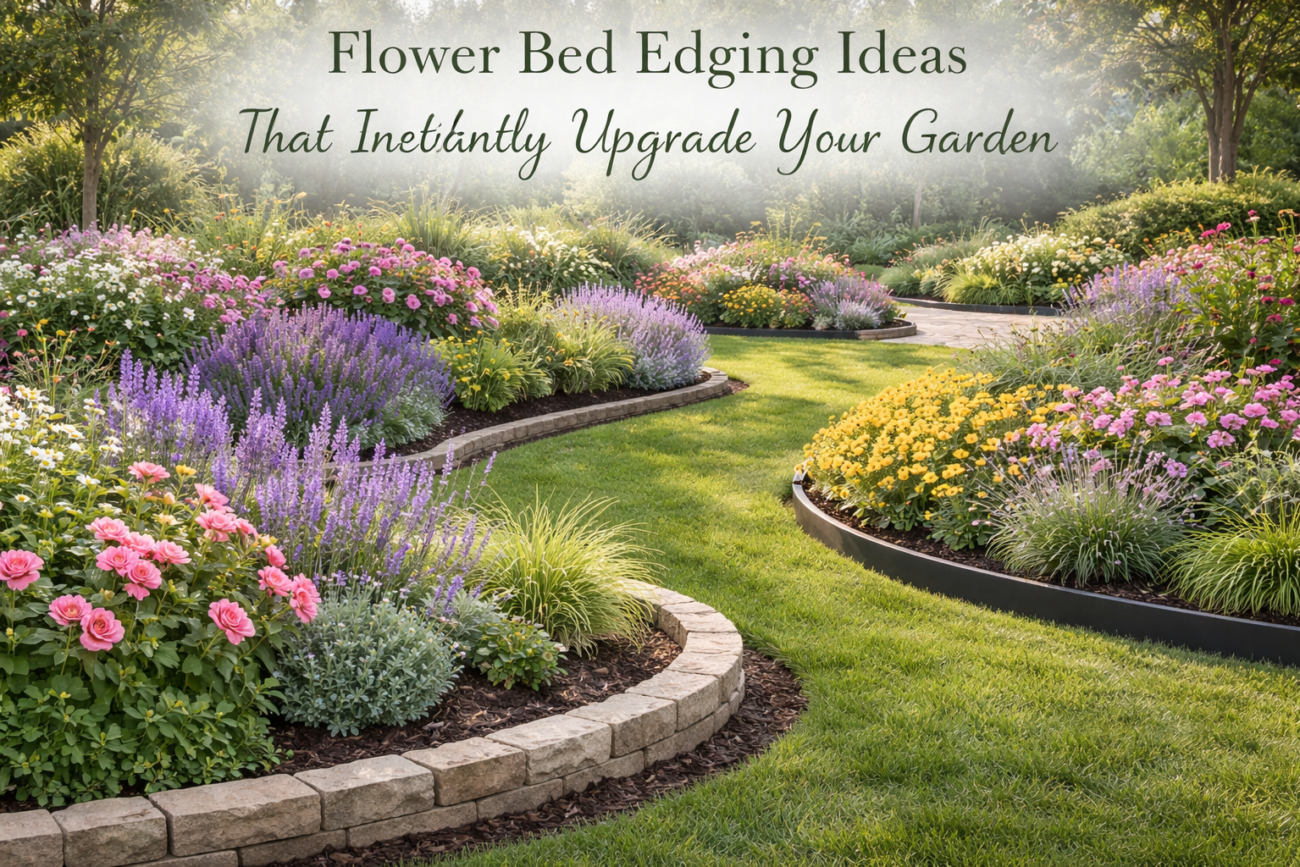
The secret to a garden that looks magazine-worthy isn’t always the flowers — it’s the edges. A clean, defined border tells the story of a garden that’s truly loved and cared for. Whether you’re working with a country cottage feel or a sleek modern yard, there’s an edging style here that will make your beds look a thousand times better.
1: Natural Stone Edging
There’s something timeless about laying flat stones along the edge of a flower bed. Natural stone edging has this gorgeous organic quality — no two stones are ever exactly the same, which means your garden gets a one-of-a-kind border that actually looks like it belongs in nature. Whether you use locally sourced fieldstone or smooth river rocks, this style brings a grounded, earthy feel to any outdoor space.
The best part? It gets better with age. As moss creeps into the cracks and the stones settle into the soil, your garden starts to look like it’s been there for decades. This edging works beautifully with cottage gardens, woodland-style planting, or any bed that leans toward the wildly romantic side of things. Stack them two to three inches high for a clean definition that also keeps mulch and soil right where you want it.
18 Lavender Flower Bed Inspiration Ideas for a Dreamy Garden Look
2: Brick Edging
Brick edging is the kind of detail that makes people stop and ask, “Did a professional do this?” The warm, reddish tones of classic brick bring a sense of structure and history to garden beds, anchoring your flowers in a way that feels polished but never fussy. You can lay bricks flat for a low-profile look or angle them vertically in a soldier row for something a little more dramatic.
It pairs especially well with traditional homes, rose gardens, and formal layouts where symmetry matters. Reclaimed bricks are particularly charming — the slightly worn, uneven edges give a handmade quality that new materials rarely replicate. Set them into the ground just an inch or two and they’ll do an excellent job of keeping grass from creeping into your beds while adding a classic architectural touch.
3: Metal Landscape Edging
If you’ve been scrolling Pinterest and falling in love with those ultra-clean, modern garden photos, metal edging is probably the secret behind many of them. Cor-Ten steel and aluminum edging create razor-sharp, continuous lines that give flower beds an almost architectural quality. The contrast between a sleek metal border and soft, billowing plants is genuinely stunning — structured and wild at the same time.
Cor-Ten steel is especially popular right now because it develops a rich, rust-colored patina that actually looks intentional and beautiful. It blends seamlessly into naturalistic or modern garden designs without ever stealing the show from the plants. Install it flush with the ground or slightly above, and it handles slopes and curves with surprising ease. Low-maintenance and extremely durable — this one’s an investment that pays off beautifully.
Pro tip: Pair Cor-Ten edging with ornamental grasses or silvery plants for a contrast that photographs absolutely beautifully.
15 Full Sun Flower Bed Ideas That Thrive in Bright Gardens
4: Wood Log Edging
Sliced log rounds and rustic timber edging bring a cabin-in-the-woods energy to flower beds that’s completely irresistible. This look is casual, warm, and deeply charming — perfect for cottage gardens, kitchen herb patches, or any space where you want things to feel a little more handmade and personal. The natural wood tones play beautifully with green foliage and colorful blooms alike.
You don’t need to buy expensive landscaping timber for this one. Fallen branches, leftover firewood, or even bamboo poles cut to length all work wonderfully. Set them upright in a shallow trench for a clean scalloped effect, or lay them horizontally for a more relaxed, meandering border. The natural imperfections in the wood — the knots, the varied heights — are what make this style feel genuinely authentic rather than manufactured.
5: Concrete Edging
Poured concrete edging is the kind of garden feature that looks simple but quietly does an enormous amount of work. When done well, it creates the smoothest, most continuous border you can get — no gaps, no wobbling stones, no sections that shift in winter. For modern or minimalist gardens, this clean, continuous ribbon of concrete is absolutely the right call.
What a lot of people don’t realize is that concrete is far more flexible than it sounds — you can tint it, texture it, or curve it into flowing organic shapes that look far from industrial. Exposed aggregate concrete, for instance, has a beautiful pebbled surface that adds texture and warmth. Whether you’re edging a sweeping curved bed or a perfectly geometric plot, poured concrete delivers a crisp finish that keeps everything looking deliberate and well-designed.
6: Pebble and Gravel Edging
A shallow river of pebbles or decorative gravel running along the edge of a flower bed creates a transition zone that’s both beautiful and practical. It softens the line between lawn and planting in the most natural way possible, while also acting as a barrier to moisture and weeds. Pale limestone chippings, black slate pieces, or smooth white pea gravel each create a completely different mood.
This style works especially well in Mediterranean-inspired gardens, dry gardens, or any yard with a gravel path running nearby — it creates a sense of continuity that ties the whole space together. Lay a weed membrane beneath the pebbles before you pour them, and you’ll have an edging solution that practically takes care of itself. The textural contrast between the coarse stones and soft plant stems is genuinely gorgeous.
7: Scalloped Victorian Edging
There’s a reason Victorian-style edging has made such a strong comeback — it’s whimsical, charming, and it instantly adds personality to even the most ordinary flower bed. The repeating scallop pattern, whether in terracotta, concrete, or painted metal, gives gardens a storybook quality that feels handpicked and joyful. It’s the kind of detail that makes people smile when they see it.
Terracotta scalloped edging looks particularly beautiful in cottage gardens or alongside raised beds where herbs and flowers intermingle freely. Painted versions — in sage green, dusty blue, or crisp white — add a pop of color that complements the blooms rather than competing with them. Set them into the ground at a slight angle for the most secure installation, and replace any cracked pieces as needed to keep the look fresh.
Pro tip: Mix two contrasting scalloped colors in alternating fashion for a playful, vintage-market look.
8: Recycled Wine Bottle Edging
Burying wine bottles neck-down along the edge of a flower bed sounds like a backyard art project — and honestly, it kind of is, and that’s exactly what makes it wonderful. When sunlight hits the bottoms of green, brown, and clear bottles sticking out of the soil, it creates a magical, jewel-toned shimmer that you genuinely cannot replicate with any store-bought product. It’s quirky, sustainable, and deeply personal.
This edging works especially well in bohemian gardens, creative outdoor spaces, or as a border for a kitchen garden where personality is welcome. The bottles don’t need to be uniform — mixing colors and sizes actually looks better than a perfectly matched row. Dig a consistent trench, set each bottle to the same depth, and tamp the soil around them firmly. It’s one of those ideas that takes an afternoon to install and earns compliments for years.
9: Gabion Basket Edging
Gabion baskets — those wire mesh cages filled with rocks — have moved from civil engineering projects into gardens in a big way, and for excellent reason. A low gabion wall running along the edge of a raised flower bed combines incredible structural strength with a rugged, industrial-meets-natural aesthetic that’s entirely unique. You can fill them with river rocks, slate, broken bricks, or even recycled glass for very different effects.
This style works beautifully in modern or industrial garden designs, especially when paired with bold ornamental grasses, structural plants like agave, or dramatic sculptural perennials. Gabion edging is especially useful on slopes and uneven ground where traditional edging tends to shift or wash away. It’s genuinely built to last decades with almost zero maintenance, which is a dream for anyone who wants a beautiful garden without constant upkeep.
10: Low Boxwood Hedge Edging
A closely clipped boxwood hedge is the classic garden edge for a reason — it brings formality, structure, and a deep, rich green color that perfectly frames whatever is blooming inside the bed. Even when the flowers are between seasons, the hedge holds the space and makes the whole garden look considered and intentional. It’s the kind of thing that photographs beautifully all twelve months of the year.
Plant small boxwood starts about eight to ten inches apart and trim them two to three times a season to maintain that dense, flat-topped look. Alternatively, lavender, rosemary, or dwarf varieties of other shrubs can give you the same hedging effect with the bonus of fragrance and seasonal color. This living edge takes a couple of seasons to fill in fully, but the result is a garden border that feels genuinely permanent and lush.
11: Slate Tile Edging
Thin slate tiles set on edge into the soil create one of the most sophisticated-looking flower bed borders you can make at home. The deep charcoal and grey tones of slate are almost impossibly elegant — they recede visually, allowing the colors of your flowers to pop without any competition. It has a Japanese garden quality to it — restrained, precise, genuinely beautiful.
Set them vertically in a continuous row with each tile overlapping slightly like roof shingles for the cleanest look, or arrange them with small gaps for a more textural effect. Slate is naturally weatherproof and won’t fade or discolor over time, so this is another long-term investment that pays dividends in curb appeal. It works best in contemporary or East Asian-inspired gardens but honestly looks refined in any setting.
12: Woven Willow or Hazel Edging
Woven willow or hazel hurdle edging is one of those garden details that looks like it came straight out of an English kitchen garden and brings incredible warmth and texture to any flower bed. The flexible stems are woven between vertical stakes, creating a basketwork border that feels handcrafted and alive. It’s beautiful in a way that no manufactured product can quite capture.
This style is perfect for vegetable and herb gardens, cottage flower beds, or any space that leans into a romantic, old-world aesthetic. Willow edging is biodegradable — it will slowly decompose into the soil over several years, which means you’ll need to replace it periodically. But many gardeners actually love this because it means the border evolves naturally rather than staying static. Some willow varieties will even sprout green shoots in spring, making the edging itself come alive.
Pro tip: Soak fresh willow rods overnight before weaving — they become far more flexible and resist cracking.
13: Cobblestone Edging
Rounded cobblestones set tightly together create a border that looks like it belongs in a centuries-old European garden — and bringing that look into your own backyard takes less effort than you’d imagine. The irregular, organic shapes of cobblestones nestle together to form a surprisingly solid and stable edging that holds up beautifully through wet winters and hot summers alike.
Cobblestone edging looks particularly stunning curving around the base of large established trees or winding along the edge of a driveway border. Mix light and dark cobbles for a checkerboard effect, or stick to one tone for a cleaner look. These stones are heavy enough that you don’t need mortar or adhesive for most installations — gravity and packing them tightly together does the job beautifully.
14: Concrete Block Raised Edging
Stacking two or three rows of concrete blocks to create a raised flower bed border is one of the most practical and satisfying garden projects you can take on over a weekend. The extra height does several genuinely useful things at once — it improves drainage, discourages pets and children from wandering into the planting area, and makes weeding and planting considerably more comfortable on your back.
The look can be refined by choosing smooth-faced decorative blocks rather than standard construction blocks, or by rendering the exterior with mortar and painting it a clean white or terracotta. Climbing plants like creeping thyme or trailing lobelia planted at the top edge will soften the structure beautifully as they spill over the sides. This is hardworking edging that earns its place in any garden with real ambition.
15: Plastic Edging Strips
Let’s be honest — not every garden project needs to be a major investment, and plastic edging strips are one of those quietly reliable solutions that deserve more credit than they usually get. Modern landscape edging in black or dark brown plastic is virtually invisible once installed, creating a crisp clean line between lawn and flower bed without calling attention to itself at all.
It’s flexible enough to follow curves and corners easily, pops into place quickly with anchor stakes, and requires essentially zero maintenance. The key is to install it slightly below the soil surface on the garden side while keeping the top edge just at grass height — this way you can mow directly over the edge without missing a strip. If you’re working on a tight budget or a temporary garden arrangement, this is the smartest, most practical choice available.
16: Upright Bamboo Edging
Sections of bamboo poles set upright in the soil like a small fence create one of the most distinctly beautiful and globally inspired edging styles available. Whether you bind them tightly together for a solid wall effect or leave small gaps between each pole, bamboo edging has an unmistakable natural elegance — lightweight, sustainable, and visually striking in any garden setting.
It works particularly well in Japanese-inspired gardens, tropical planting schemes, or anywhere you want texture that doesn’t compete with the planting. Bundle the poles with natural twine at intervals for a cleaner, more finished look. Bamboo is naturally resistant to rot and insects, though treating it with linseed oil once a year will extend its life significantly. This is one of those edging styles that looks genuinely handmade in the best possible way.
17: Mosaic Tile Edging
If your garden is a place for self-expression as much as horticulture, mosaic tile edging is an absolute dream. Broken tiles, colored ceramic pieces, and stained glass fragments set into mortar along the edge of a flower bed turn a functional border into a genuine piece of outdoor art. No two sections look identical, and the way the colors change with different light throughout the day is genuinely mesmerizing.
This style takes more time and patience than most other edging options, but the result is completely one-of-a-kind and endlessly personal. It works best in smaller beds where the detail can really be appreciated up close — a front garden entrance, a patio border, or a courtyard planting. Use weather-resistant outdoor tile adhesive and grout to ensure everything stays in place through rain and frost. It’s the kind of thing that becomes the most talked-about detail in your entire outdoor space.
Pro tip: Sketch your mosaic pattern on paper first and group tile colors into jars before you begin — it makes the installation process far smoother.
18: Sunken Soldier Course Brick
The sunken soldier course — bricks set vertically at a 45-degree angle into the ground with just their corners showing above the surface — is one of those design details that looks far more difficult than it actually is. The diamond-pattern tops create an almost decorative fence effect that’s simultaneously classic and striking. It’s been used in walled kitchen gardens for centuries, which tells you something about how enduring the look really is.
This style works beautifully in formal garden layouts, heritage properties, or any front garden where you want the flower beds to look truly established and intentional. Use a string line to keep the installation perfectly straight, and set each brick to exactly the same depth in a shallow layer of sharp sand for a level, professional result. Old bricks with worn edges look even more authentic than new ones — check salvage yards for genuine beauties before heading to the garden center.
Share this content:
