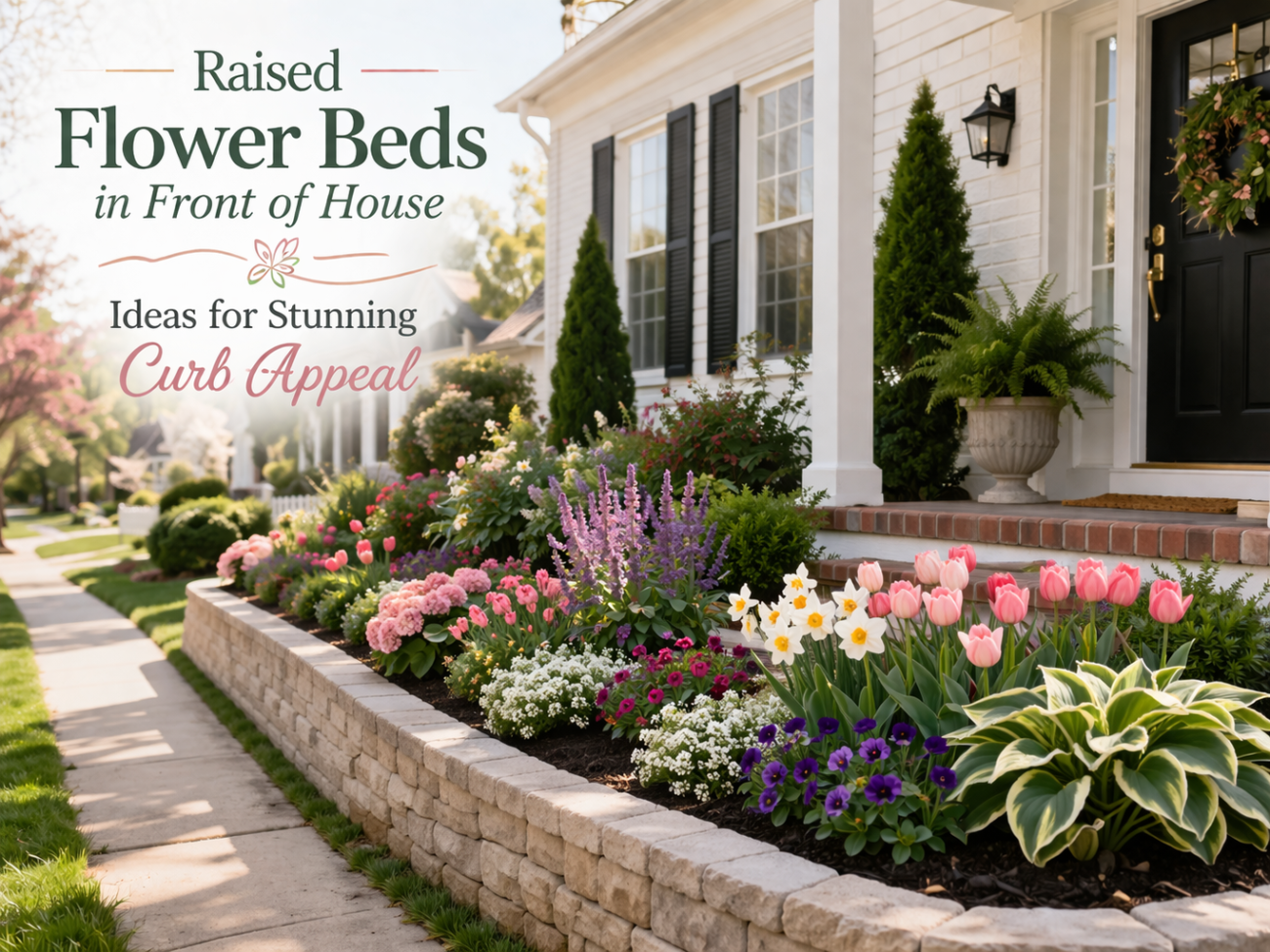
Transform your front yard from forgettable to jaw-dropping with these creative, budget-friendly raised bed designs your neighbors will envy.
18 IdeasAll Styles CoveredDIY FriendlyEvery Budget
There is something quietly magical about pulling up to a home and being greeted by lush, overflowing raised flower beds lining the front of the house. It is the kind of curb appeal that feels effortless — even though you know exactly how much love went into every plant, every stone, and every bag of rich garden soil. If you have been dreaming about giving your front yard a serious glow-up, raised flower beds are honestly one of the best investments you can make, both for the look of your home and for the joy it brings you every single morning.
What makes raised beds so special in the front yard is the instant structure they add. They frame your walkway, echo the lines of your home, and give your flowers a stage to really show off. Whether you have a tiny strip of land between the sidewalk and your porch or a wide-open front yard just waiting for a plan, there is a raised bed style here that will feel like it was designed exactly for your space. Let us explore 18 of the most beautiful, Pinterest-worthy ideas out there right now.
1: Classic Cedar Wood Raised Beds
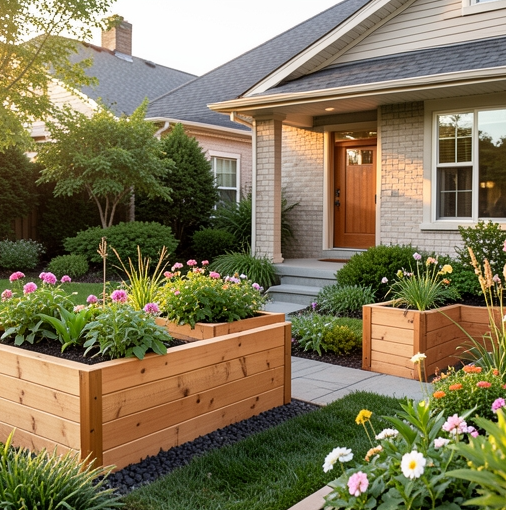
Timeless · Natural · DIY Favorite
Cedar wood raised flower beds have earned their reputation as the gold standard for front yard gardening — and honestly, once you see them in person, you completely understand why. The warm, honey-toned wood looks beautiful against both light and dark exterior paint colors, and cedar naturally resists rot and insects without needing chemical treatment. You can build a simple rectangular frame in a weekend, fill it with quality garden mix, and immediately have something that looks polished and intentional from the curb. Plant lavender, ornamental grasses, or cascading petunias and you have yourself a Pinterest board brought to life right at your front door.
The real beauty of cedar beds is how gracefully they age. Over time, the wood develops a silvery-grey patina that actually makes the beds look even more charming and established — like they have always been there. If you want to keep that warm wood tone longer, a light coat of linseed oil once a year works beautifully. Consider building beds that taper slightly in height, taller toward the house and lower near the walkway, to create a layered, designed look that adds real depth and dimension to your front yard landscaping without overwhelming the space.
18 Flower Bed Edging Ideas That Instantly Upgrade Your Garden
2: Stacked Stone Raised Flower Beds
Elegant · Durable · High-End Look
If you want your front yard to look like it belongs in a glossy home magazine, stacked stone raised flower beds are the move. There is a permanence and elegance to natural stone that no other material can replicate — it looks expensive because it genuinely is a premium choice, but it is also a one-time investment that will literally outlast your home. Stacked fieldstone, flagstone, or even dry-stack limestone creates beds with incredible texture and natural variation. The irregular shapes and earthy tones tie beautifully into the surrounding landscape, and the beds seem to grow more beautiful with each passing season as moss and patina develop between the stones.
The key to making stacked stone beds look their absolute best is in the planting. Soften the hard edges with flowing, romantic plants — think English roses tumbling over the sides, creeping thyme spilling between the stones, or feathery ornamental grasses that sway in the breeze. A stone bed with a few well-chosen architectural plants feels like a considered design decision rather than just a garden project. If full natural stone feels out of budget, cast concrete stacking blocks achieve a very similar look for a fraction of the cost and are totally DIY-friendly for a weekend project.
3: Tiered Cascading Raised Bed Gardens
Dramatic · Space-Smart · Show-Stopping
Tiered raised flower beds are the secret weapon of landscape designers — they take the same footprint and turn it into something that looks three times as impressive. Imagine stepping up from the street and seeing your front yard laid out in lush, terraced levels: the lowest tier bursting with colorful annuals, the middle tier holding perennial shrubs, and the top tier anchored by small ornamental trees or tall grasses. The levels create rhythm, movement, and a sense of abundance that flat ground simply cannot match. They also solve a practical problem beautifully: if your front yard has a slope, tiered beds turn that challenge into the most stunning feature of your whole street.
When planning tiered beds, think about scale relative to your home. A modest ranch house looks best with two gentle tiers using shallow height differences, while a taller two-story home can handle three bold tiers without being visually overwhelmed. Use the same material throughout all the tiers — whether that is wood, stone, or concrete block — to keep everything looking cohesive and intentional. The planting scheme matters enormously here: go with plants that spill gracefully over each edge, like trailing lobelia, sweet potato vine, or alyssum, so the tiers flow together rather than looking like stacked boxes filled with dirt.
18 Lavender Flower Bed Inspiration Ideas for a Dreamy Garden Look
4: Brick Raised Flower Beds with Classic Charm
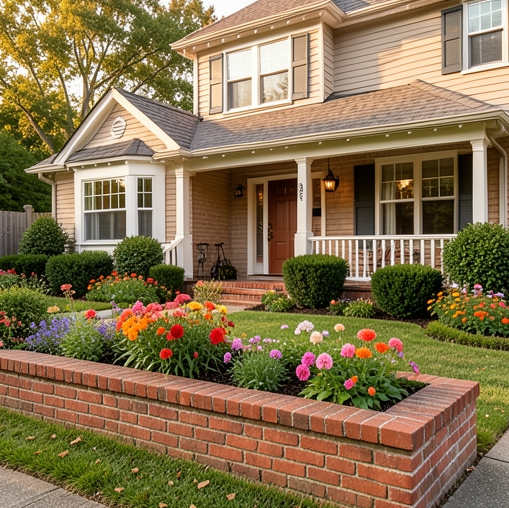
Traditional · Cottage-Style · Neighborhood Favorite
Brick raised beds have a warmth and permanence that feels deeply rooted in tradition — and there is a very good reason they have been a beloved front yard feature for over a century. The russet and warm orange tones of classic brick complement nearly every exterior style, from a colonial brick home to a painted craftsman cottage to a white farmhouse. You can choose to mortar the bricks for a clean, formal look or lay them dry-stack style for a slightly more rustic, relaxed feel. Either way, the result is a sturdy, handsome structure that gives your front yard an instant sense of history and intentionality that newer materials simply cannot fake.
One of the most charming ways to use brick raised beds is to mirror the architecture of your home — especially if your house already has brick accents, a brick chimney, or a brick walkway. When the material language carries through from the house to the garden beds, everything feels cohesive and expertly designed. Plant cottage favorites inside: foxglove, hollyhocks, catmint, and climbing roses are all absolutely perfect companions for the classic brick aesthetic. If you add a small brick edging path between two flanking beds leading to your front door, you will have a front yard that genuinely stops traffic on your street.
5: Modern Concrete Block Raised Beds
Contemporary · Clean Lines · Urban Chic
For homes with a modern, minimalist, or industrial aesthetic, concrete block raised flower beds are an absolute dream. The clean, straight lines and matte grey surfaces complement contemporary architecture beautifully — they feel designed rather than just functional. Smooth-faced concrete blocks stacked in a sleek rectangle with crisp right angles can look genuinely architectural, almost like the flower beds were an intentional extension of the home’s design rather than an afterthought added to a bare yard. Paint them in a warm white, matte black, or even a deep charcoal for a look that photographs stunningly and has an incredibly strong point of view.
The planting style inside modern concrete beds should match that same clean, curated energy. Avoid anything too fussy or cottage-style — instead, go for bold, architectural plants that make a statement. Ornamental grasses like feather reed grass, black-eyed Susans, agave, or even a striking row of lavender all look spectacular against the cool concrete backdrop. Odd numbers of the same plant repeated along the length of the bed create a graphic, satisfying rhythm that feels intentionally designed. Finish the look with a clean gravel or pea stone mulch inside the beds rather than wood chip, which will keep the whole composition looking sharp and modern.
6: Rustic Railroad Tie Flower Beds
Rustic · Bold · Farmhouse Favorite
Railroad tie raised beds have an unmistakably bold, earthy character that works incredibly well with farmhouse, rustic, and country-style homes. The thick, dark timbers are visually heavy in the best possible way — they feel grounded, sturdy, and like they have been part of the land for decades. Their dark weathered tone creates a beautiful high-contrast backdrop for bright blooms like yellow marigolds, red geraniums, or vivid zinnias, making the flowers practically pop off the dark wood. If your front yard has wide-open space and needs strong structure to feel complete, railroad ties deliver that visual weight with tremendous character and presence.
When using railroad tie style beds, lean into that rugged aesthetic all the way through your planting choices and surrounding materials. A gravel or decomposed granite pathway winding between railroad tie beds, bordered by simple wildflowers and native grasses, creates a front yard that feels both effortless and deeply intentional. Keep the arrangement loose and naturalistic — perfectly symmetrical layouts can look too formal with this material. Instead, vary the bed shapes and let plants spill casually over the edges. The contrast between the rough, dark timber and soft, overflowing blooms is exactly the kind of charming tension that makes for incredible Pinterest photos and even better real life moments.
7: Curved and Flowing Raised Bed Designs
Organic · Soft · Garden Designer Trick
Most raised flower beds default to rectangles, and while rectangles are perfectly lovely, curved beds are where front yard landscaping becomes truly extraordinary. A gently curving raised bed that sweeps alongside your driveway or arcs around your front walkway creates movement and flow that makes the whole yard feel like a professionally designed garden rather than a DIY project. Curves soften the hard edges of a house, complement the natural contours of the land, and allow plants to be viewed from multiple angles as you approach. Flexible metal landscape edging, curved retaining wall blocks, or even a carefully laid dry stack stone border can all create beautiful curves in your front yard.
The planting inside curved beds should reflect and enhance that flowing quality. Avoid stiff, upright plants planted in straight rows — instead, mix heights and textures in a naturalistic, drifting pattern. Think of how plants grow in a cottage garden or a meadow: loose clusters that blend gently into one another. Russian sage, coneflowers, ornamental grasses, and catmint all work beautifully in curved beds because their arching, flowing growth habits echo the organic shape of the border itself. A curved raised bed filled with this kind of planting is one of those things that looks absolutely incredible from the street, completely different every month of the growing season, and never, ever fails to earn compliments.
8: Raised Beds Flanking the Front Door
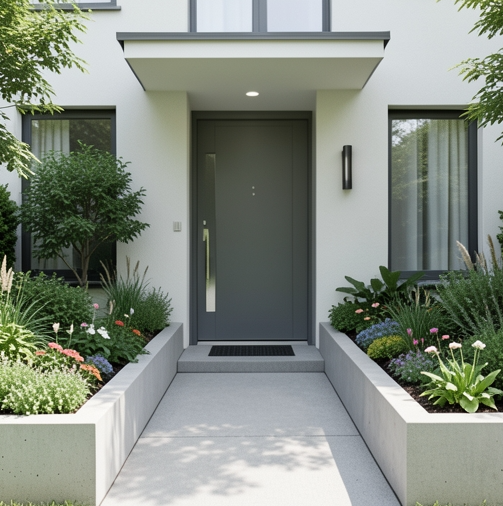
Symmetrical · Welcoming · Classic Elegance
If there is one raised flower bed placement that feels universally welcoming and endlessly elegant, it is a pair of matching raised beds flanking the front entrance. Something about that perfect symmetry on either side of the front door draws the eye straight to the heart of the home, creates a natural frame for the entryway, and gives every arrival — including your own — a small sense of ceremony. It does not take enormous beds to make this look spectacular: even two relatively modest cedar or stone planters on either side of the steps, overflowing with colorful seasonal flowers, can transform an ordinary front entrance into something that feels genuinely considered and beautiful.
For the most impactful look with flanking beds, mirror the plantings exactly or near-exactly on both sides. Identical plants on each side reinforce that satisfying symmetry and make the whole design feel intentional and polished. Classic choices include boxwood topiaries or bay laurel standards underplanted with seasonal color, tall ornamental grasses paired with trailing flowers that spill over the edges, or a single gorgeous flowering shrub like hydrangea or knockout rose centered in each bed surrounded by low-growing annuals. Change out the seasonal color two or three times a year — spring pansies to summer petunias to fall mums — and your front door will look perpetually fresh and beautifully curated all year long.
9: Raised Beds Along the Front Walkway
Inviting · Fragrant · Walkway Wow
There is nothing quite like walking up to a front door flanked on both sides by lush raised flower beds that line the entire length of the path. It creates an experience — a small, beautiful journey from the sidewalk to your door — rather than just a functional route across the yard. Long, low raised beds running parallel to your front walkway guide the eye, slow visitors down to appreciate the flowers, and add enormous visual length and interest to a narrow front yard. They also serve a practical purpose: clearly defining the path and preventing any trampling of your lawn by guests who might otherwise cut across the grass.
When planting beds along a walkway, think about the sensory experience as well as the visual one. Include fragrant plants like lavender, jasmine, sweet alyssum, and roses that will perfume the air as people pass through. Vary the heights deliberately: low-growing plants at the front edge of the bed, medium blooms in the middle, and taller statement plants toward the back near the house. This layered approach ensures the walkway always feels lush and full, no matter the season. Warm-toned flowers — corals, oranges, yellows, and deep reds — make the walk feel welcoming and energetic, while cool purples, whites, and blues create a more serene, calming arrival experience.
10: Raised Flower Beds with Built-In Benches
Functional · Clever · Conversation Piece
Here is a front yard raised bed idea that consistently stops people in their tracks on Pinterest: beds designed with integrated seating along the top edges of the frame. When you widen the top cap of a cedar or pine raised bed to 10 or 12 inches, you instantly create a bench that invites people to sit, linger, and actually enjoy the garden rather than just walk past it. It transforms the front yard from a purely aesthetic space into a genuinely livable outdoor room — somewhere to sit in the morning with a cup of coffee, chat with a neighbor in the evening, or watch the kids play in the yard. The combination of function and beauty is exactly the kind of smart, layered design that homeowners and renters both absolutely love.
This style works best when the beds are at least 18 to 24 inches tall — a comfortable seat height — and are framed from a sturdy, smooth-finished wood that is comfortable to sit on. Sand and seal the top cap well, and consider adding a few weather-resistant outdoor cushions tied to each corner for even more comfort and a pop of color. Plant the beds themselves with tall, full plants so that when you sit on the bench edge, you are essentially sitting inside the garden, surrounded by blooms — it is an absolutely magical, immersive feeling that photographs beautifully and makes your front yard one of the most genuinely inviting spots on the whole block.
🌱 Quick Pro Tips for Front Yard Raised Beds
- Always use a high-quality raised bed mix — 60% topsoil, 30% compost, 10% perlite is a classic winning ratio
- Add a weed-barrier fabric at the base before filling to dramatically reduce future maintenance
- Place taller plants toward the back or center and trailers at the edges for a natural, layered look
- Match your bed material to your home’s exterior for a cohesive, designer-level result
- Include at least one plant with year-round interest — an evergreen shrub, ornamental grass, or boxwood — so beds never look bare
- Water deeply and less frequently to encourage roots to grow down into the rich soil
11: Corner Accent Raised Flower Beds
Strategic · Architectural · Visual Anchoring
Sometimes the most impactful placement for a raised flower bed is not along the walkway or near the door — it is in the corners of your front yard where the property line meets the street. Corner raised beds act as visual anchors that ground the entire yard, define the edges of your property with beauty rather than just a fence, and draw the eye in from the street. A single large raised bed in each front corner, generously planted and overflowing with color, can make a relatively ordinary front yard look cohesive, landscaped, and deeply cared for. It is a design trick that professional landscapers use constantly, and it works for every architectural style and budget.
For corner beds, bigger is generally better — a tiny raised box in a corner looks a bit lost and uncertain, but a substantial bed that really commands the space looks confident and intentional. Fill corner beds with a mix of tall anchor plants like ornamental grasses, dwarf crape myrtles, or knockout roses paired with medium perennials and cascading annuals at the edges. The goal is for each corner bed to feel like a generous, lush focal point that reads beautifully from the street, both in terms of height, color, and texture. When both front corners are done well, they frame the entire house like a painting, giving your whole front yard a composed, finished quality that few other landscaping moves can match.
12: Painted Wood Raised Beds for a Pop of Color
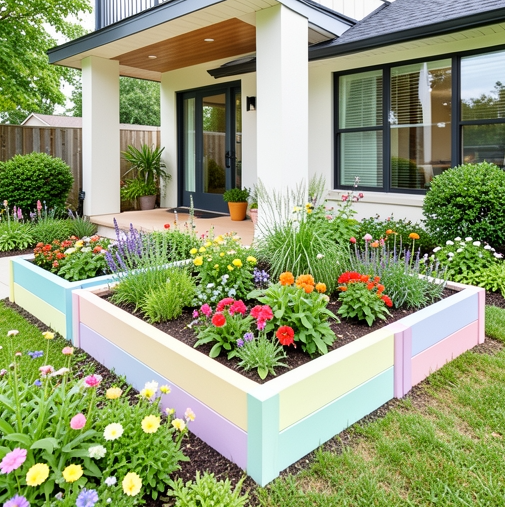
Playful · Bold · Personality-Packed
Who says raised flower beds have to be natural wood tones or grey stone? Painted wood raised beds are one of the most delightful, personality-packed front yard ideas out there — and they are incredibly popular on Pinterest right now for very good reason. Imagine a deep forest green raised bed overflowing with white and blush roses, or a warm terracotta-painted frame contrasting with violet salvia and yellow coreopsis, or a classic black painted raised bed with a white house backdrop and cheerful summer annuals spilling over the sides. The color of the bed itself becomes part of the design, adding a layer of personality and intentionality that natural materials alone simply cannot achieve.
The secret to pulling off painted raised beds in the front yard beautifully is to connect the paint color to something else that already exists in your exterior palette — the front door color, the shutters, the trim, or even a color from your landscaping. When the raised bed color echoes something already present on the house, the whole composition feels designed from the inside out rather than like a mismatched addition. Use exterior-grade paint formulated for wood, and apply at least two coats over a good primer for durability. Refresh the paint every two to three years to keep things looking crisp, and you will have a front yard feature that looks as thoughtful as anything you would find in an architectural digest feature spread.
13: Gabion Wall Raised Flower Beds
Industrial Chic · Unique · Modern Edge
Gabion raised beds — those wire cage structures filled with rocks, river stone, or pebbles — are one of the most architecturally interesting and genuinely unique options for front yard landscaping. They have an industrial-meets-natural quality that works brilliantly with modern, contemporary, and even rustic home styles, and they look dramatically different from everything else on the block, which is exactly what makes them such consistent performers on Pinterest. The texture and visual depth of the rock-filled wire cages is extraordinary — light plays across the different surfaces at different times of day, creating a constantly shifting, almost sculptural quality that feels more like garden art than a simple flower bed border.
Gabion beds are also incredibly practical: they are extremely durable, drain perfectly, and require essentially no maintenance once installed. The planting that goes inside gabion beds should feel deliberately chosen to contrast with or complement the rugged, textural quality of the stone-filled walls. Airy, delicate plants look spectacular against the rough gabion texture — think ornamental grasses that catch the light, feathery fennel, Russian sage, or even a climbing rose that can eventually be trained across the top of the cage structure. Gabion raised beds are an investment in both aesthetics and longevity — they genuinely improve with age and weather beautifully for decades with absolutely no upkeep required.
14: Raised Flower Beds with Trellises and Vertical Interest
Vertical · Dramatic · Small Yard Solution
If you have a smaller front yard or want to create a dramatic focal point that draws the eye upward, combining raised flower beds with vertical trellis structures is absolutely inspired. A simple wooden or metal trellis attached to the back of a raised bed instantly adds three-dimensional structure and opens up the possibility of growing climbing plants — sweet peas, clematis, climbing roses, black-eyed Susan vine, and morning glories are all breathtakingly beautiful when given a vertical framework to grow on. The bed handles your low-to-mid height color, and the trellis creates a gorgeous backdrop of flowering vines that adds height, movement, and an almost theatrical quality to your front yard.
This approach is especially powerful placed against a fence, a blank garage wall, or at the property boundary — it softens hard architectural edges and transforms them into living, flowering backdrops that make the whole front yard feel more layered and lush. When choosing a trellis style, try to harmonize it with the raised bed material: a cedar lattice trellis looks beautiful behind a matching cedar raised bed, while a sleek black powder-coated metal trellis pairs perfectly with modern concrete or painted wood beds. Let the climbing plants do their thing through the growing season and trim back in fall — the following spring, the whole composition will return even fuller and more established than the year before.
15: Colorful Seasonal Planting Raised Beds
Year-Round Color · Festive · Always Fresh
Some homeowners prefer raised flower beds that stay looking polished and refined all year long, while others prefer something that evolves with the seasons in bold, joyful bursts of color — and if you are in that second camp, seasonally planted raised beds in front of the house are pure joy. The idea is simple: keep the raised bed structure as a permanent, beautiful feature of your front yard, and rotate the plantings inside it with each season to reflect the time of year. Spring brings tulips, daffodils, and pansies; summer gets packed with petunias, marigolds, salvia, and lantana; fall welcomes ornamental kale, mums, and pumpkins; and winter can shine with evergreen branches, holly berries, and twinkle lights threaded through the soil.
This style of planting turns your raised beds into a living seasonal display that your neighbors, passersby, and anyone who visits will look forward to seeing change with every season. It does require more effort and investment than a set-it-and-forget-it perennial scheme, but the rewards in terms of curb appeal and personal joy are enormous. Keep a few structural evergreen plants — boxwood, ornamental grasses, or a dwarf conifer — permanently in the center of each bed to maintain volume and structure through the transitions, and fill in around them with seasonal color as each new growing period arrives. Photographed at each stage of the year, these beds also make some of the most consistently beautiful content on Pinterest all year long.
16: Low-Maintenance Native Plant Raised Beds
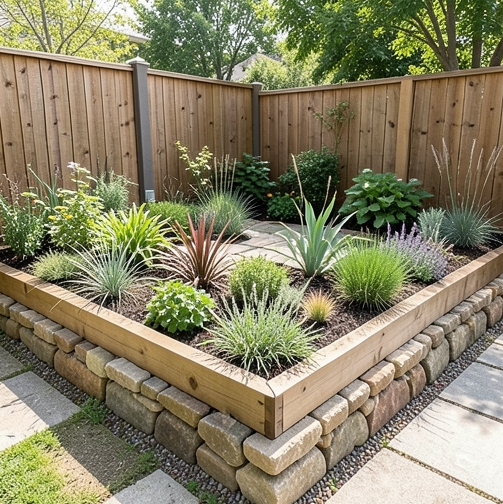
Eco-Friendly · Effortless · Pollinator Paradise
There is a growing and beautiful movement toward front yard gardens that work with nature rather than against it — and native plant raised flower beds are perhaps the most meaningful expression of that philosophy. When you fill raised beds with plants native to your region, something wonderful happens: the garden becomes part of the local ecosystem rather than just a visual feature. Native plants require dramatically less water once established, need little to no fertilizer, and attract a stunning variety of butterflies, bees, hummingbirds, and beneficial insects that bring the garden to life in a way that traditional ornamental plantings simply cannot match. The ecological benefit is real, and the visual beauty is equally remarkable.
The key to making native plant raised beds look curated and intentional rather than just wild is in the editing and the structure of the bed itself. A beautifully built raised bed border gives even the most naturalistic planting scheme a sense of design and intentionality that reads as a deliberate choice rather than neglect. Research the most beautiful native plants for your specific region — prairie coneflowers, black-eyed Susans, wild bergamot, native asters, little bluestem grass, and butterfly weed are all stunning options across much of North America — and layer them in height order with the tallest at the back. The result will be a front yard raised bed that looks gorgeous from spring through fall frost, requires almost no work, and quietly does important ecological work every single day.
17: Raised Beds with Decorative Edging and Caps
Polished · Detail-Oriented · Designer Look
Sometimes it is the finishing details that elevate a raised flower bed from nice to absolutely extraordinary. Decorative caps, edging, and trim details on raised beds are the equivalent of crown molding in a beautifully finished room — they signal craftsmanship, attention to detail, and real care for the finished result. A simple cedar raised bed with a wide, beveled top cap suddenly looks like custom millwork. A concrete block bed capped with a row of flat fieldstone suddenly looks like something a professional landscaper charged thousands of dollars for. These details cost relatively little in materials and time but add tremendous perceived value and visual quality to your front yard.
Think about the cap material as the jewelry of the raised bed — it should either perfectly match the bed material for a unified, monolithic look, or beautifully contrast it for visual interest. Dark stained wood caps on light grey concrete blocks look incredibly sophisticated. Smooth limestone caps on rough fieldstone walls create a beautiful textural dialogue. Wide cedar caps with a slight overhang cast a shadow line that gives the bed real architectural definition, especially in morning and evening light when shadows are long. If you already have raised beds but they feel a little unfinished or plain, adding a quality cap is the single fastest and most affordable upgrade you can make to instantly elevate their entire appearance.
18: Raised Beds with Lighting for Evening Curb Appeal
Magical · Evening Drama · Year-Round Wow
Here is a raised flower bed idea that completely changes the game for evening and nighttime curb appeal: integrated or strategically placed landscape lighting. When your raised flower beds in front of the house are properly lit, your home goes from looking lovely during the day to looking absolutely magical after dark — the kind of warm, welcoming glow that makes people slow down as they drive past. Solar stake lights placed inside the beds among the plants create a soft, scattered twinkle effect that is genuinely enchanting. Low-voltage uplights positioned in front of or behind the beds cast dramatic shadows through ornamental grasses and tall flowers that look like living art projected onto your home’s facade.
For the most beautiful result, think about lighting your raised beds as you would light a room — with layers. Uplights in the beds themselves, path lights along the walkway, and perhaps a softer wash light on the house facade behind the beds all working together create a front yard that transitions beautifully from daytime charm to nighttime drama. Warm white LED bulbs in the 2700K to 3000K color range are universally flattering for garden plantings and give that cozy, golden-hour quality that photographs and reads so beautifully in the evening. This is the raised bed idea that your neighbors will notice most, that visitors will comment on first, and that will make you fall in love with pulling into your driveway every single night of the year.
Your Dream Front Yard Is Closer Than You Think
Raised flower beds in front of the house are one of those rare garden projects where the effort-to-impact ratio is completely in your favor. Even a single well-built, generously planted raised bed can transform the entire feeling of your home’s exterior — making it feel more loved, more designed, and more alive.
Whether you start with one simple cedar frame flanking your front door or go all in on a full tiered garden that lines your entire walkway, the important thing is simply to start. Pick the style that speaks to you, the materials that suit your budget and your home, and the plants that genuinely make your heart happy. The rest will come together beautifully.
Save this article to your Pinterest boards and come back whenever you need a fresh dose of inspiration. Your neighbors are going to ask you who did your landscaping — and the answer is going to be you.
🌿 Saved to your inspiration board · Share with someone who loves their garden · Pin it for later
Share this content:
