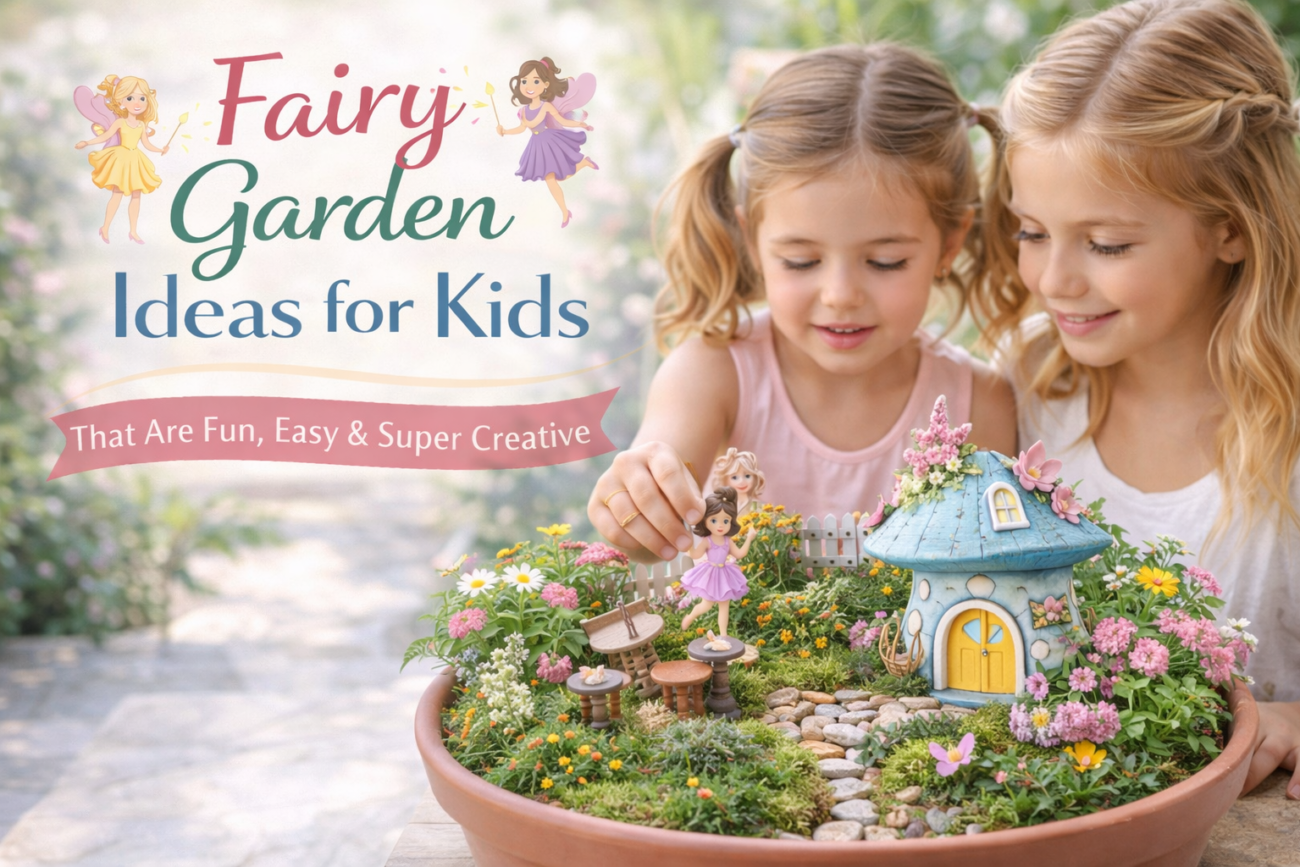
Creating a fairy garden with your child is one of those rare activities that blends imaginative play, hands-on crafting, and a genuine love of nature — all in one magical little space. Whether you have a sprawling backyard or just a windowsill, these ideas will spark hours of creative fun.
1: Teacup Fairy Garden Ideas

A teacup fairy garden might just be the most charming way to introduce little ones to the world of miniature gardening. All you need is an old teacup or teapot — the bigger and more mismatched, the better — some potting soil, tiny succulents or moss, and a handful of mini fairy figurines. Kids absolutely love arranging the little plants and accessories inside the cup because it feels like they’re designing a real home for a magical creature. The scale of it makes everything feel delightfully secret and special, like a tiny world tucked inside a piece of crockery.
The best part is that teacup gardens are completely portable, which means your child can move their fairy’s home wherever the mood strikes — onto a porch table, a bedroom windowsill, or even carry it out to the garden for some fresh air. You can start with a single teacup and gradually add more to create a whole teacup neighborhood. Look for vintage teacups at thrift stores together with your kids; the treasure-hunting part of the project is half the fun. Add a tiny “Welcome, Fairies” sign made from a popsicle stick and some paint, and you’ve got a complete little world your child will be endlessly proud of.
18 Stunning Garden Pots Ideas That Will Transform Your Outdoor Space
2: Fairy Door on a Tree
Kids go wild for this one
There’s something genuinely magical about attaching a tiny fairy door to the base of a tree in your garden — it immediately transforms an ordinary backyard into a place full of wonder and possibility. You can buy ready-made fairy doors in wood, ceramic, or resin, or make one together using craft foam, painted cardboard, or even clay. Kids love the idea that a tiny door means a real fairy lives inside the tree, and many children will spend hours leaving little notes, acorn caps of “fairy tea,” or tiny flower bouquets outside the door as gifts. It ignites storytelling in the most natural, unforced way.
To really build out this idea, help your child create a whole fairy “front garden” around the base of the tree door. Plant some low creeping thyme or baby’s tears ground cover, scatter a few painted pebbles as stepping stones, and tuck in a tiny mailbox made from a matchbox so fairies can leave messages back. Some parents take this a step further and secretly slip handwritten notes in the mailbox — tiny letters written in sparkly gel pen “from” the fairy — and the look on kids’ faces when they find a reply is absolutely priceless. It’s the kind of childhood memory that sticks.
3: Mossy Log Village
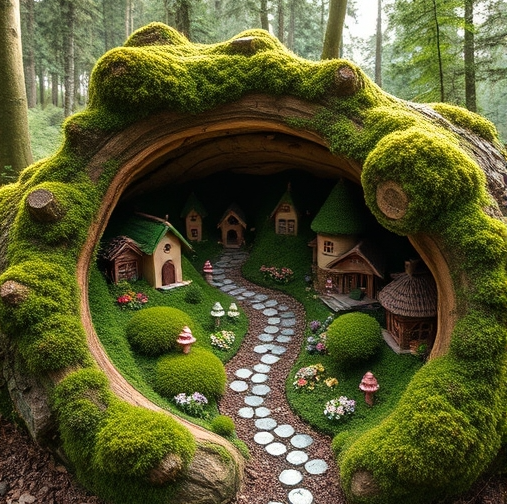
If you have any fallen branches or logs in your yard, don’t toss them — they’re the perfect foundation for a rustic, enchanted fairy village that looks like it came straight from a storybook. Arrange logs of different sizes and let the natural shapes guide the design. A hollow log can become a fairy cottage, a broad flat slice can be a community gathering table, and a forked branch propped upright makes a perfect fairy climbing frame. The organic textures of bark and lichen already look magical without any extra decoration, which means even minimal effort results in something that looks genuinely stunning.
Encourage your kids to hunt for natural materials to furnish the village — acorn caps make perfect bowls, fallen leaves become rugs, seed pods work as little boats, and small smooth pebbles serve as cobblestones. This kind of open-ended nature play is incredibly beneficial for children’s creativity and sensory development. Water the logs lightly and moss will often begin to grow on its own over a few weeks, making the village look increasingly wild and fairy-inhabited with time. It’s a living, evolving garden that keeps surprising both kids and grown-ups alike.
16 Front Porch Swing Decor Ideas That Make Your Porch Extra Cozy
4: Painted Rock Pathway
Great rainy day craft
A painted rock pathway is one of the easiest and most rewarding fairy garden projects you can do with kids of any age, and it doubles as a wonderful rainy-day art activity before the garden even gets started. Collect smooth pebbles from a garden center, a riverbed, or a craft store, then set up an outdoor painting station with acrylic paints, fine brushes, and a whole lot of imagination. Kids can paint tiny flowers, polka dots, stars, little fairy faces, or abstract swirls — there are no rules here, and the more colorful and eclectic the collection, the better the pathway will look when it’s all laid out.
Once the rocks are dry and sealed with a coat of Mod Podge or outdoor varnish to keep the colors vibrant through rain, arrange them in a winding path through the fairy garden leading from one feature to the next. The meandering quality of a curving rock path immediately makes any garden space feel intentional and storied, like the fairies themselves laid it out over many years. You can also paint numbers on the rocks to create a fairy “treasure hunt” trail, or write tiny letters that spell out a secret fairy message when the rocks are placed in the right order. Kids are endlessly inventive once you give them the basic concept.
5: Miniature Fairy Pond

Every proper fairy garden deserves a shimmering little pond, and making one is far simpler than it sounds. A shallow terracotta saucer, a pie dish, or even an old bin lid can become a magical reflective pool when filled with water, a few floating flower petals, and a handful of pretty pebbles arranged around the edges. Kids love making the “beach” around the pond out of fine sand or gravel, placing tiny shells as decorative accents, and setting a little fairy figurine beside the water as if she’s just stopped there for a drink on a warm summer afternoon.
For an elevated version of this project, help your child add aquatic plants to the pond — water lettuce and water hyacinth are incredibly easy to grow and look beautifully lush floating on the surface. A small solar-powered fountain pump (available cheaply online) will add a gentle trickling sound that turns the whole garden into a truly sensory experience. If you’re making an indoor fairy terrarium, use a mirror tile instead of real water for the pond effect — it catches the light beautifully and requires absolutely zero maintenance. Either way, the pond becomes the centerpiece that the rest of the fairy garden naturally grows around.
6: Fairy Garden in a Boot
Adorable planter hack
Old rubber boots or worn-out rain wellies make the most wonderfully whimsical fairy garden containers, and children find them instantly delightful because there’s something inherently funny and joyful about plants growing out of a shoe. Drill a few drainage holes in the sole, fill with good potting compost, and let your child plant a combination of tiny trailing plants, moss, and mini succulents right up to the top of the boot. A pair of mismatched wellies planted side by side looks absolutely adorable on a porch step or garden wall, especially when decorated with hand-painted spots, stripes, or floral patterns.
The boot garden is particularly great for apartment dwellers or families without much outdoor space because it’s entirely self-contained and portable. Tuck in a tiny fairy door cut from craft foam on the side of the boot, add a mini mushroom ornament peeking out from between the plants, and the whole thing becomes a complete tiny world. Children also love using their own outgrown boots for this project, which adds a layer of sentimental value — it’s a lovely way to repurpose something meaningful rather than throwing it away. Paint the child’s name on the boot for a keepsake they’ll love looking back on years from now.
7: Glow-in-the-Dark Fairy Garden
Evening garden magic
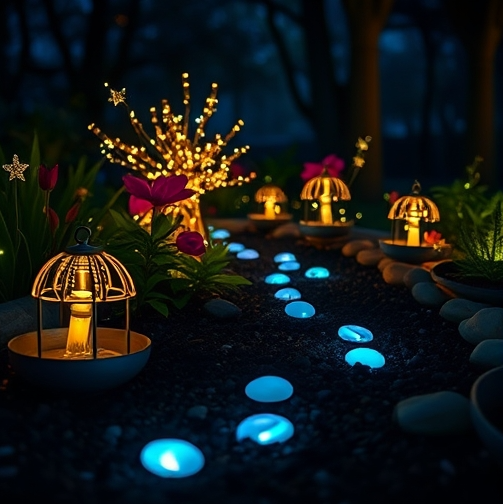
A glow-in-the-dark fairy garden is pure childhood wonder in physical form, and kids are completely enchanted when the garden transforms at dusk into a softly luminous wonderland. The secret is simple: use glow-in-the-dark paint on rocks, pebbles, and ornaments, and weave solar-powered fairy lights or tiny LED string lights throughout the plants and along pathways. During the day it looks like a regular (and already lovely) fairy garden, but as evening falls, the magic reveals itself and the garden glows with an otherworldly soft light that genuinely does look like fairy magic.
This idea works especially beautifully in raised planter beds or containers placed near a bedroom window, so children can watch the transformation from inside as it gets dark. Glow powder mixed into clear craft glue can be painted onto flower petals, mushroom caps, and pebbles, and the effect after an hour of daylight charging is genuinely spectacular. For a finishing touch, hang a few small glass jar lanterns from nearby branches with tea lights inside — battery-operated ones are completely safe for kids — and the whole space becomes a nighttime fairy spectacle that will have children begging to go outside after bedtime to check on their fairies.
8: Pallet Wood Fairy Fence
A tiny picket fence surrounding the fairy garden instantly elevates the whole space from a collection of plants and ornaments into a real defined fairy property — and building one from craft sticks or pallet offcuts is a satisfying afternoon project that even young children can get hands-on with. Cut craft sticks or thin wooden dowels into fence post lengths, sand down any rough edges, and let kids paint them in soft whites, sage greens, or even rainbow colors if your fairy prefers something more festive. Use a hot glue gun (parents handle this part) to attach them to two horizontal base strips, and the fence is done in under an hour.
For an even more rustic and authentic look, gather thin straight twigs from the garden, peel off any loose bark, and lash them together with garden twine to make a naturally textured fairy fence that looks like it was built by the fairies themselves from foraged woodland materials. Add a tiny swinging gate made from two twigs hinged together with twine, and the detail will absolutely delight anyone who spots it. The fence serves a practical purpose too, helping to define the garden’s boundaries and keep mulch or gravel from spilling out, while making the whole design look intentional and beautifully finished.
9: Fairy Swing & Hammock

If there’s one fairy garden accessory that children respond to with absolute, immediate delight, it’s a tiny swing hanging between two sticks or posts — there’s something about the idea of a fairy swinging lazily in her garden on a sunny afternoon that captures the imagination perfectly. Making a fairy swing is incredibly simple: tie two equal lengths of thin twine or ribbon to a small flat piece of wood or a broad twig for the seat, then hang it from a bent wire arch pushed into the soil or between two stakes. You can also weave a tiny hammock from colorful embroidery thread strung between two mini posts for a slightly more elaborate but equally enchanting result.
Kids love carefully placing a fairy figurine on the swing and adjusting it so she looks like she’s really sitting there at rest, perhaps with a tiny book (made from a folded piece of paper) in her hands. This is also a wonderful opportunity to teach children simple knot-tying — the kind of practical, hands-on skill that feels genuinely useful because it’s being learned for a real purpose. You can find mini fairy furniture kits at craft stores that include swings and benches if you’d rather start with something ready-made, or search thrift stores for dollhouse furniture that’s just the right scale to feel convincingly fairy-sized.
10: Seashell Fairy Garden
Perfect summer holiday project
A seashell fairy garden is the perfect way to repurpose treasures collected on beach holidays, turning a box of gathered shells into a living, thriving miniature landscape full of coastal charm. Large shells — clam shells, scallops, and abalone — make gorgeous natural planters for single succulents or tiny tufts of moss. Smaller shells become pebble-like ground cover, spiral shells stand upright as decorative pillars, and a large flat shell filled with fine sand and a few pebbles makes an instantly convincing fairy beach scene. The natural iridescence and varied textures of shells give the garden a richness and beauty that man-made ornaments simply can’t replicate.
This garden style works particularly beautifully in a wide, shallow tray or wooden box filled with a mix of sand and potting soil. Encourage your child to arrange the shells in a way that tells a story — perhaps the fairy lives in the large clamshell cottage, swims in the abalone bowl pond, and sunbathes on the flat oyster shell terrace. Add some coastal plants like sedum, ice plant, or sea thrift for an authentic seaside atmosphere, and tuck in a few mini starfish ornaments from a craft store. The combination of natural shells and living plants creates a garden that feels genuinely wild and discovered rather than arranged and artificial.
11: Fairy Vegetable Patch
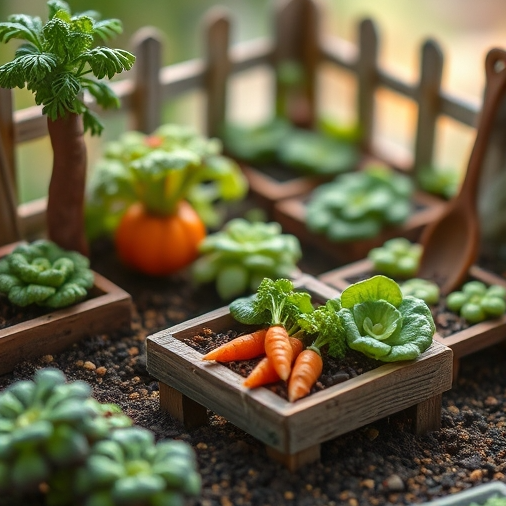
Teaching kids about where food comes from is so much easier when it’s framed as a fairy farming adventure — the idea that your fairy needs her own tiny vegetable patch to grow food is immediately compelling to imaginative little minds. Plant genuinely edible miniature vegetables like baby radishes, cherry tomatoes, dwarf lettuce, or compact herbs like thyme and chives in a small raised bed or planter box that’s labeled as the “fairy farm.” Children who might resist eating vegetables at dinner often become enthusiastic about eating things they’ve grown themselves, especially when the narrative includes a fairy who also eats from the same garden.
Make little signs from craft sticks and card stock that label each plant in the fairy’s own handwriting (a slightly wiggly, whimsical script works perfectly), and add small scarecrow made from a forked twig dressed in fabric scraps to keep garden pests away from the fairy’s crops. If you want to involve older children in the full gardening experience, let them start plants from seed in small peat pots and transplant them into the fairy patch when they’re big enough — watching something grow from a seed is a profound experience for children that stays with them for life. The fairy vegetable patch can easily become a gateway to a lifelong love of gardening.
12: Twig & Bark Furniture
Making tiny furniture from twigs, bark scraps, and natural materials is one of the most absorbing and creatively satisfying activities in the whole fairy garden world — children can spend entire afternoons happily constructing tables, chairs, beds, and bookshelves from foraged sticks. The method is simple: gather straight twigs of similar diameter, cut them to length with a pair of garden scissors or small pruning shears (with adult supervision for younger kids), and bind them together with thin garden twine or hot glue to form the furniture shapes. A square of four twigs makes a table top, four uprights become legs, and suddenly there’s a fairy dining table that looks genuinely rustic and beautiful.
Flat pieces of bark make excellent tabletops, shelves, and bed bases, while a rolled piece of bark can become a fairy log sofa with moss cushions glued inside. Encourage children to think about scale by placing their fairy figurines next to each piece as they build it, adjusting the size until it looks convincingly right for a tiny woodland resident. This activity is particularly wonderful for developing patience and fine motor skills in a completely pressure-free environment — there’s no wrong way to make fairy furniture, and even the wonkiest little twig chair is charming in its own way. Display the furniture collection in a shadow box if the garden is brought indoors.
13: Fairy Garden in a Wheelbarrow
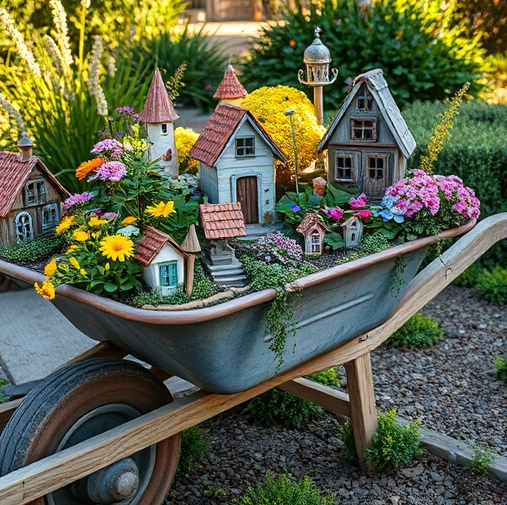
Viral garden decor idea
An old wooden or metal wheelbarrow transformed into a fairy garden is one of those ideas that stops people in their tracks — it’s unexpected, charming, and almost impossibly photogenic in a cottage garden setting. Fill the barrow with potting soil and create a landscape that spills beautifully over the edges with trailing plants like creeping jenny, sweet alyssum, or lobelia in soft purples and whites. In the center, build up a slightly elevated fairy house or toadstool village surrounded by upright plants like miniature lavender or small ornamental grasses, giving the garden real depth and dimensionality that a flat container can’t achieve.
The wheelbarrow format is especially wonderful because it can be moved around the garden to wherever it looks best or wherever the light is right for the plants inside it. Children love having ownership of a garden feature that’s mobile and uniquely theirs — they can wheel it to a new spot, tend to the plants, and rearrange the fairy accessories as the mood takes them. Prop the handles on a rustic wooden stand to keep it stable and slightly elevated, which also makes the garden easier to tend and admire. Paint the wheelbarrow in a soft sage green, chalky white, or a faded terracotta for a look that feels genuinely curated rather than accidental.
14: Mushroom Village
Fairy gardens and mushrooms go together like magic and moonlight — there’s something about the rounded shape of a toadstool that feels inherently enchanted, and a cluster of painted mushroom ornaments transforms any garden corner into a genuinely fairy-tale scene. You can buy ceramic or resin fairy mushrooms in all sizes from garden centers, or make your own from air-dry clay, painted terracotta flower pots, or even painted stones with painted sticks as stems. Classic red-and-white spotted toadstools are always the most popular with children, but encourage your kids to invent their own mushroom colors and patterns for a truly original village aesthetic.
For a more naturalistic approach, grow real ornamental mushrooms alongside the decorative ones — oyster mushroom kits are inexpensive, easy, and genuinely thrilling for children to watch as they fruit. Arrange a cluster of mushrooms at the base of a tree or mossy log to create the sense that they’ve grown there naturally over time, adding a fairy house tucked between two large caps and a winding pebble path leading to the mushroom cluster’s entrance. Plant low-growing creeping plants around the base to tie everything together, and add a few firefly-inspired fairy lights wound through the arrangement for evening magic that makes the whole mushroom village look truly alive.
15: Fairy Garden Terrarium
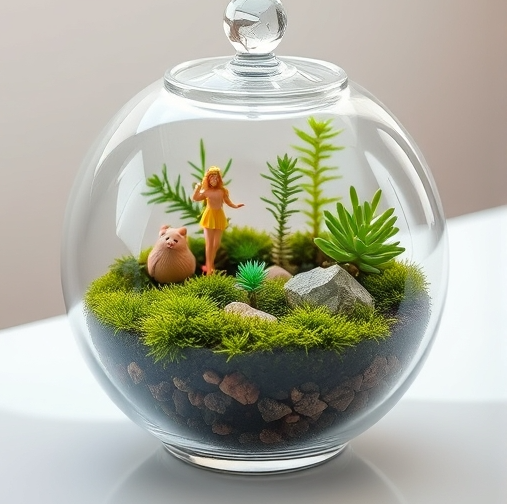
Perfect for small spaces
A fairy garden terrarium is the ideal option for families without outdoor space, or for creating a magical focal point inside the home on a coffee table, bookshelf, or bedroom window ledge. Choose a large glass container — a wide-mouthed fish bowl, a cloche, a glass cookie jar, or a proper terrarium tank all work beautifully — and layer the bottom with pebbles for drainage, activated charcoal to keep the soil fresh, and then a generous layer of terrarium compost. Plant with moisture-loving miniature plants like ferns, mind-your-own-business, mosses, and tiny fittonia with their striking patterned leaves, building up a lush layered landscape that looks almost unreal in its perfection.
The enclosed glass environment creates its own miniature ecosystem, with condensation forming and recirculating so the plants require very little watering once established — which makes it genuinely low-maintenance as well as beautiful. Children can spend a long time arranging the fairy accessories inside: a tiny door leaned against a mossy bank, a pebble path, a mirror tile as the fairy pond, a small crystal or gemstone as a fairy treasure. The terrarium format is also wonderful for creating themed fairy worlds — an enchanted forest, an underwater fairy cave, a winter wonderland with white sand and silver ornaments. The glass walls make everything look like a living snow globe, and children are endlessly fascinated watching their tiny world thrive.
16: Recycled Materials Fairy Garden
Eco-friendly & creative
One of the most genuinely creative fairy garden projects is one that uses only recycled and repurposed materials — it’s an incredible lesson in sustainability and resourcefulness wrapped up in a magical, playful activity. Tin cans become fairy cottages when painted and decorated with paper windows and tiny curtains. A broken clay pot, laid on its side with the shards arranged as a cascading terrace, makes a stunning architectural feature. An old colander becomes a perfect planter with built-in drainage, a cracked teapot becomes a fairy’s summer home, and even an old birdcage filled with plants and tiny ornaments becomes the most magical fairy garden feature imaginable.
Let children take the lead in sourcing materials from around the house and deciding how to repurpose them — the constraints of working with found objects push creativity in surprisingly productive directions, and children often come up with ideas that adults wouldn’t think of. Bottle caps become fairy stepping stones, egg cartons become seed starters for fairy garden plants, wine corks become little stools and tables, and a broken necklace becomes fairy garden treasure scattered among the plants. This approach to fairy gardening teaches children that creativity doesn’t require spending money — some of the most beautiful gardens are built entirely from things that were headed for the bin, given a second life by a child’s imagination.
Ready to make some fairy garden magic?
Whether you start with a single teacup or go all-in on a full garden transformation, the most important ingredient in any fairy garden is time spent together. Pick one idea that excites your child the most, gather your materials, and let their imagination lead the way. Save this article to your Pinterest boards so you can come back to it whenever you need fresh inspiration — and happy gardening!
Share this content:
