
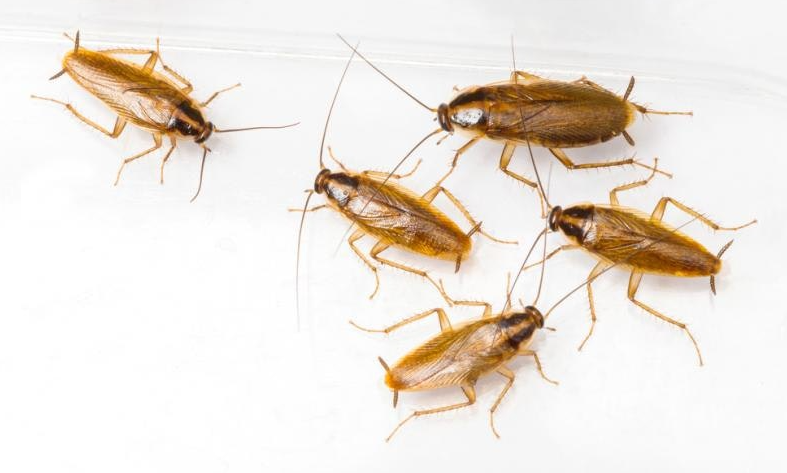
Modern women confidently work in every field today, but there is still one tiny creature that can make anyone jump in fear — the reddish-brown insect we call the cockroach.
These insects are commonly found roaming around kitchens, hiding in cracks, and appearing again and again no matter how many times you try to eliminate them.
There are more than 4,500 species of cockroaches in the world, but only about 30 species live close to humans.
How Long Have Cockroaches Been on Earth?
One of the most surprising facts about cockroaches is their age. These insects are so ancient that they existed even before dinosaurs — and they’re still here today.
Fossil records show that cockroaches appeared during the Carboniferous period, meaning they have been around for 350 million years.
Dr. Nawaz Alam Khan, Assistant Professor of Zoology at Delhi University, explains:
“Cockroaches are older than dinosaurs. When we talk about ancient times, we refer to the Mesozoic era — the age of dinosaurs — but cockroaches existed even before that, during the Carboniferous period.”
Dr. Dushyant Kumar Chauhan, Associate Professor of Zoology at CCS University, Meerut, confirms the same:
“Cockroaches appeared long before dinosaurs and belong to the invertebrate group. After them, other complex life forms evolved.”
Why Is Their Survival So Impressive?
Over millions of years, Earth’s climate, environment, and living conditions have changed dramatically. Many species have gone extinct — including dinosaurs — but cockroaches have remained almost the same.
Their body structure has barely changed, which shows how perfectly adapted they already were.
A Body Designed for Survival — Even Without a Head
A cockroach’s body is divided into three parts: head, thorax, and abdomen, and they have two long antennae that act as sensory organs.
Their outer covering, called the exoskeleton, is made of chitin, the same material found in human nails. This tough shell protects them from threats and environmental changes.
One of the most astonishing facts is that a cockroach can survive even after losing its head.
How?
Cockroaches have clusters of nerve cells called ganglia spread throughout their body. Although they have a brain-like control center in their head, their thorax and abdomen can continue functioning independently.
They breathe through tiny holes on their body called spiracles, not through the mouth — so they don’t need a head to breathe.
However, they die within a week because they cannot drink water without a mouth.
Why Do Cockroaches Appear Mostly at Night?
People often see cockroaches at night, especially in kitchens and bathrooms. During the day, they hide in dark and moist places.
Cockroaches are nocturnal insects, meaning they avoid light and come out in the dark to search for food and water.
Kitchens offer food crumbs, while bathrooms provide moisture — the two things cockroaches need most.
Can a Cockroach Survive a Nuclear Explosion?
Many people believe cockroaches can survive a nuclear bomb. Experts say this is only partially true.
Cockroaches have a higher tolerance for radiation — almost 15 times more than humans — but:
They cannot survive the extreme heat, blast pressure, or direct impact of a nuclear explosion. Their cells would be destroyed instantly.
However, in areas farther from the blast center, they may survive better than other insects due to their radiation resistance.
How Long Does a Cockroach Live?
Their lifespan varies by species:
- Some live 150–170 days
- Others can survive close to one year
- Female cockroaches usually live slightly longer than males
The Secret to Their Long Survival
Scientists believe cockroaches have survived for millions of years because of:
- Their strong exoskeleton
- Ability to live without food for a month
- Ability to survive without a head for days
- High adaptability to different environments
- High resistance to radiation
- Fast breeding and reproduction
These unique survival abilities make cockroaches one of the toughest and oldest living creatures on Earth.
Share this content: